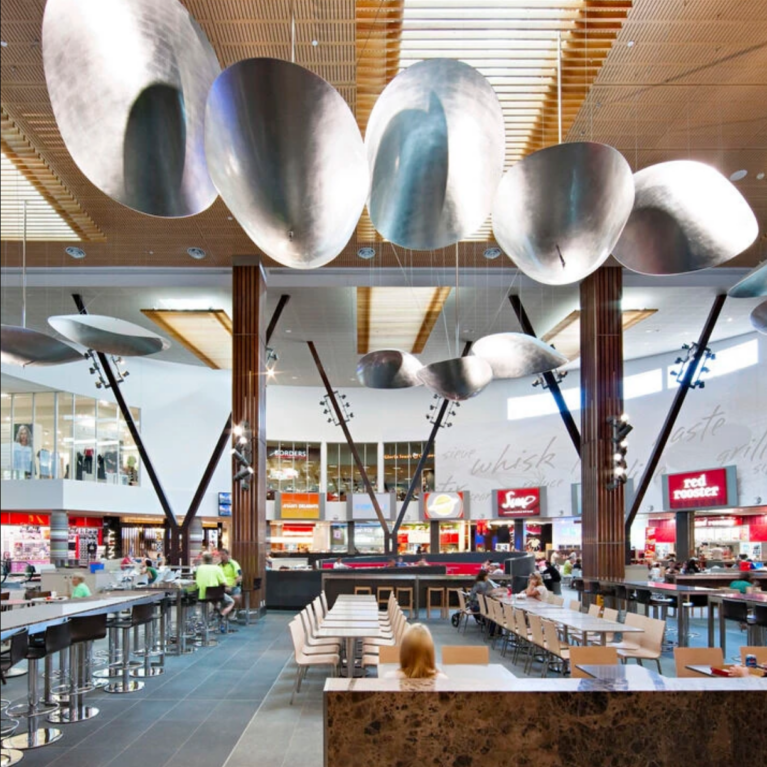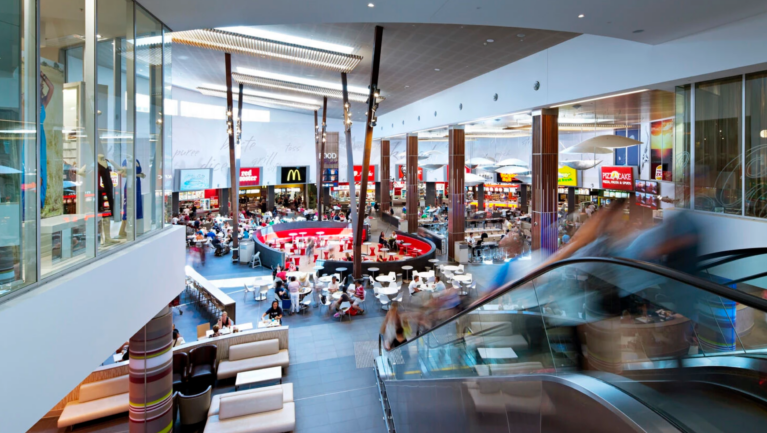
The food court layout relies on distinct furniture groupings and column grids to break down a large communal volume into manageable, comfortable seating pockets. An escalator line connects multi-level retail pathways to this central dining hub, while a continuous glazed upper gallery keeps vertical views open throughout the precinct.
The retail design management strategy organizes high-density food operators along the perimeter walls, leaving the central floor plate open for flexible customer dining. In the middle of the space, a large, custom-curved banquette upholstered in deep red acts as a vibrant spatial anchor, dividing individual dining tables from the high-traffic thoroughfares. This is balanced by structural columns finished in dark vertical timber slats that introduce architectural rhythm across the expansive hall.
To the left, a glazed glass balustrade frames an upper balcony level, allowing natural daylight from high-level clerestory windows to penetrate deep into the lower dining zones. The floor finish transitions from dark charcoal tiles on the active transit paths to light-toned stone surfaces within the seating areas to define functional boundaries. Slender, angled feature columns reach toward the high ceiling, adding structural dynamism to the marketplace environment.