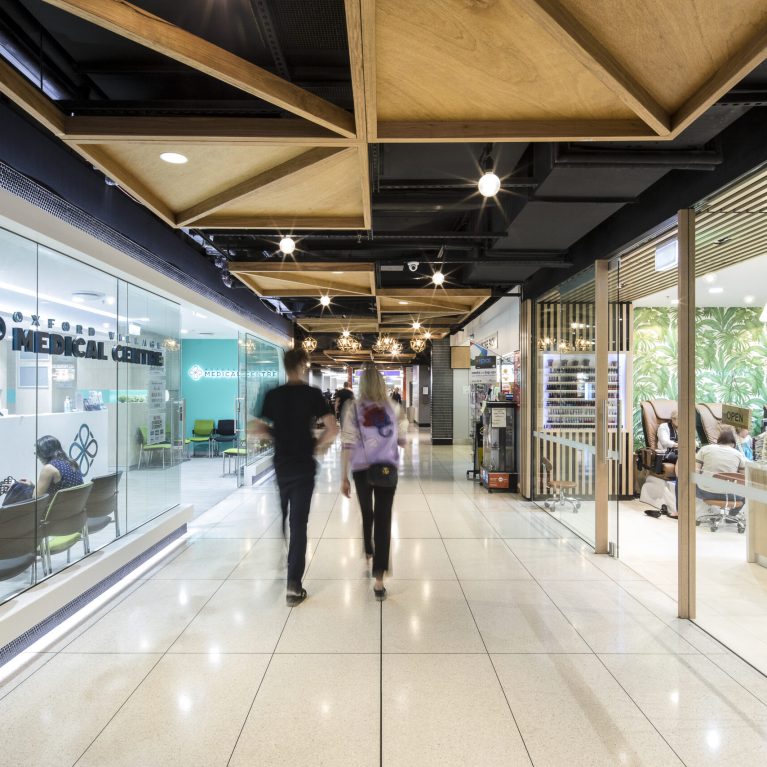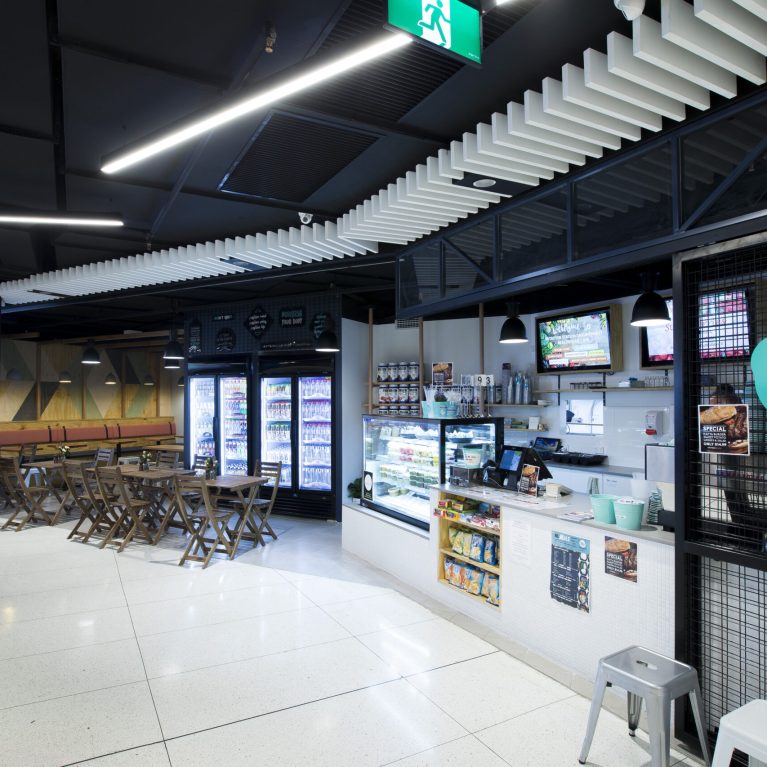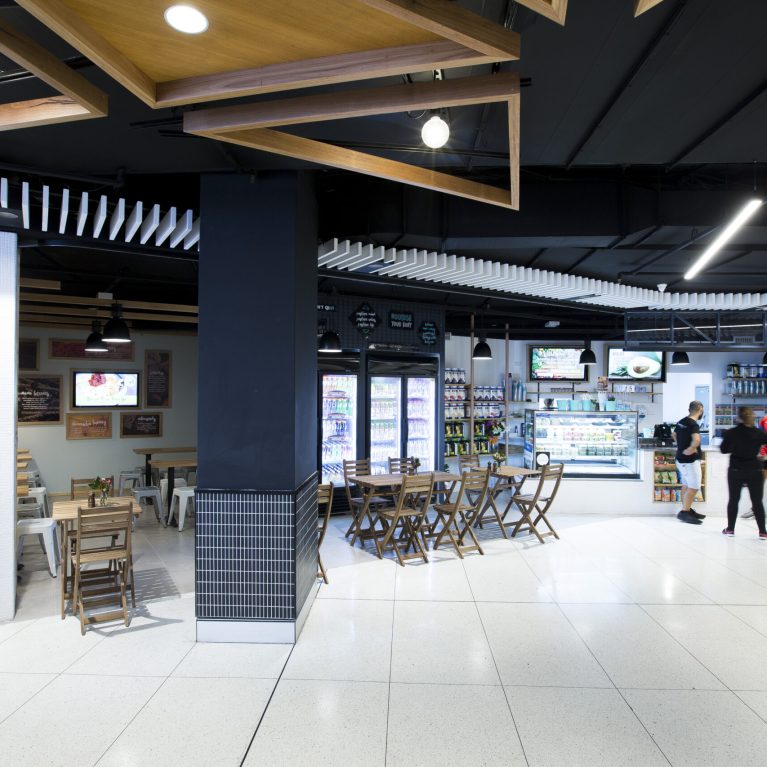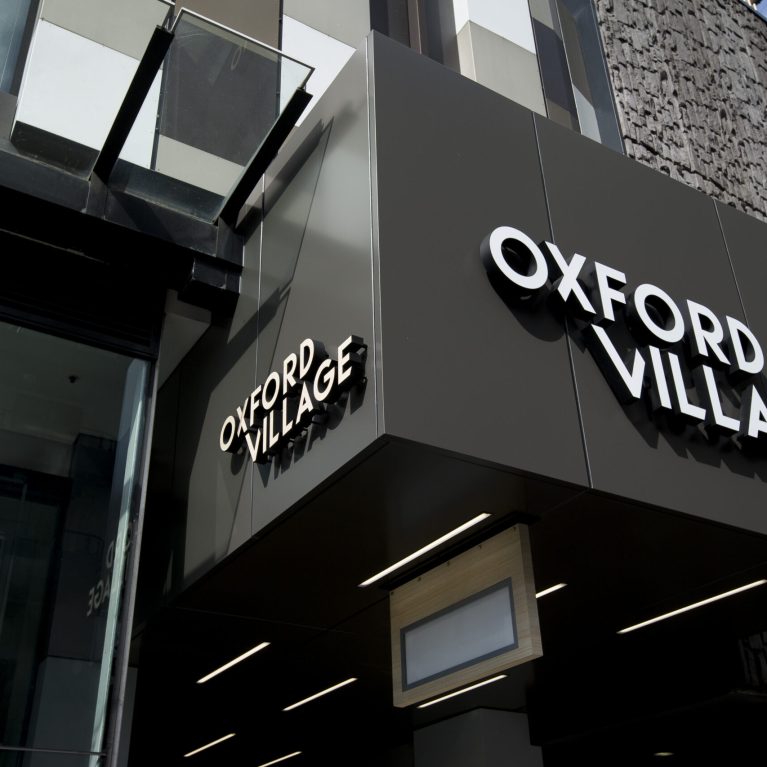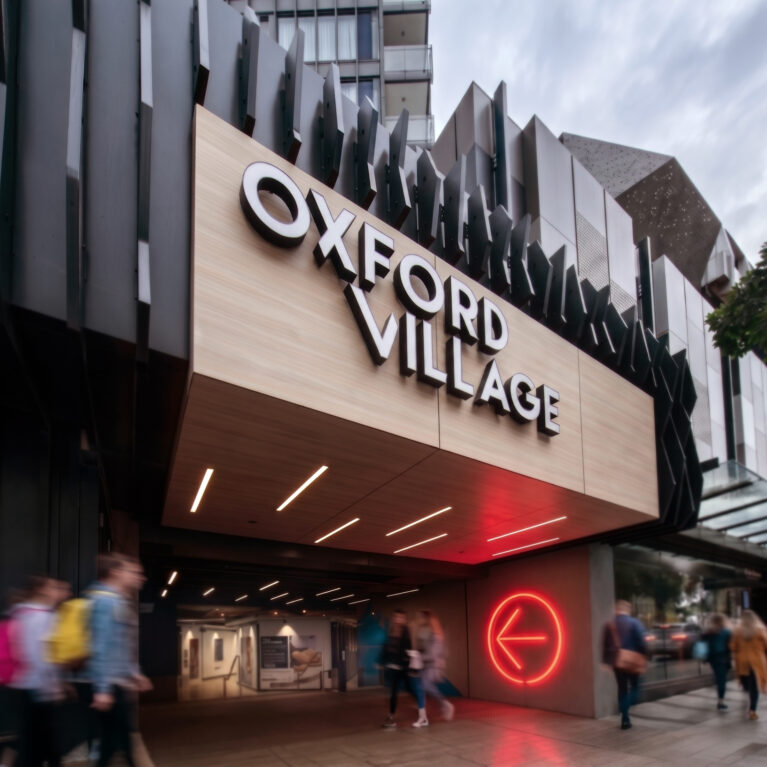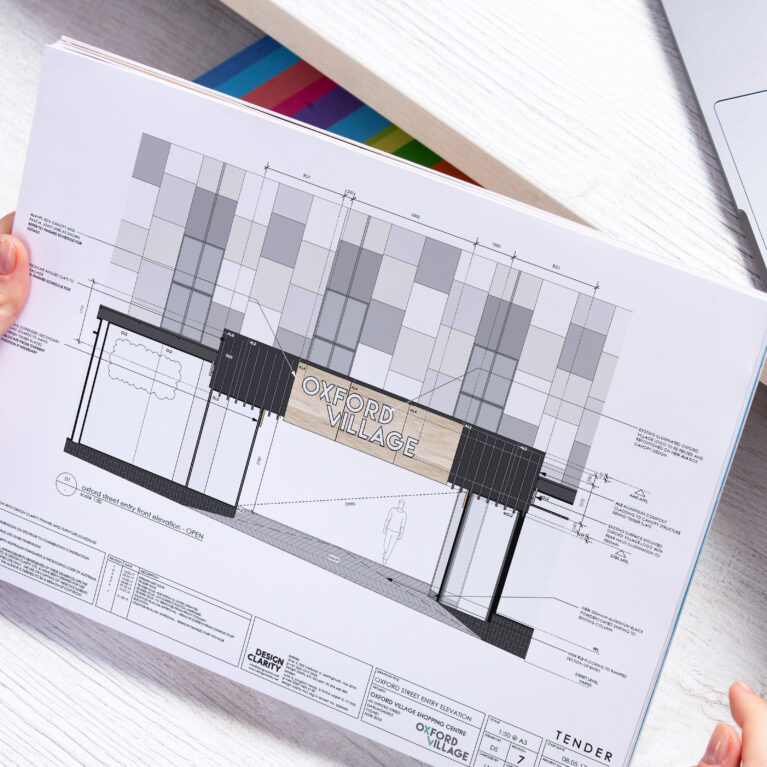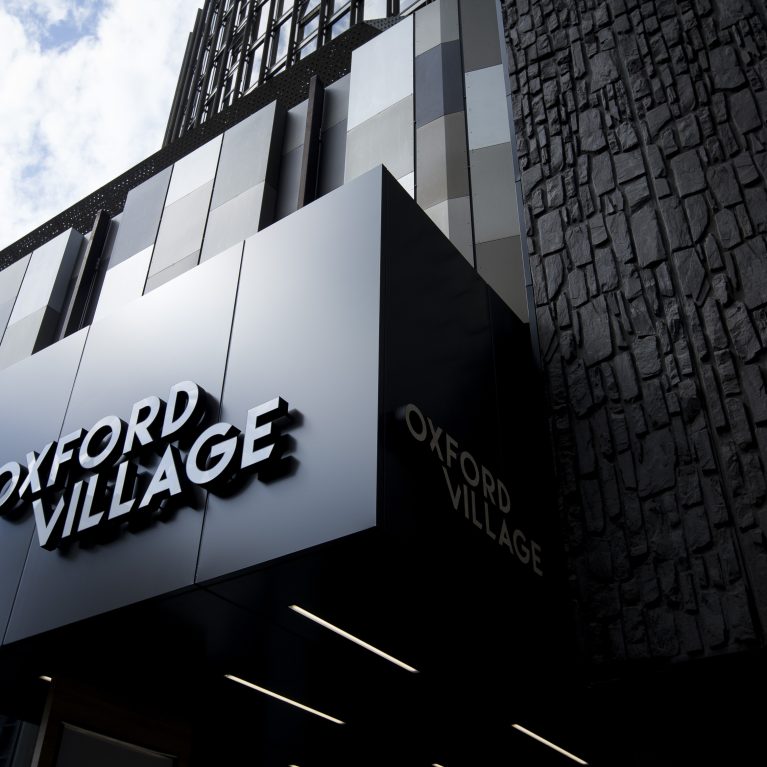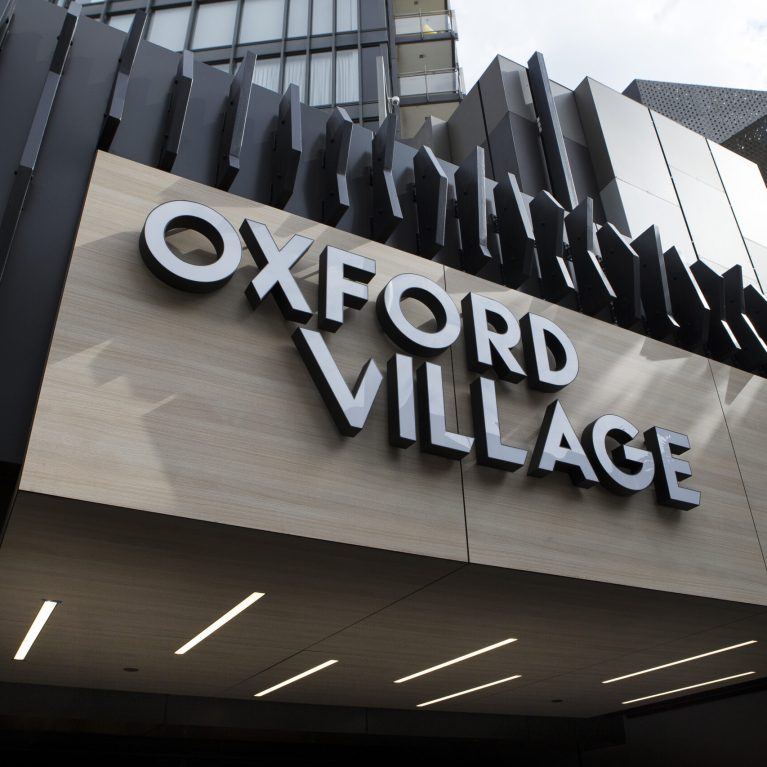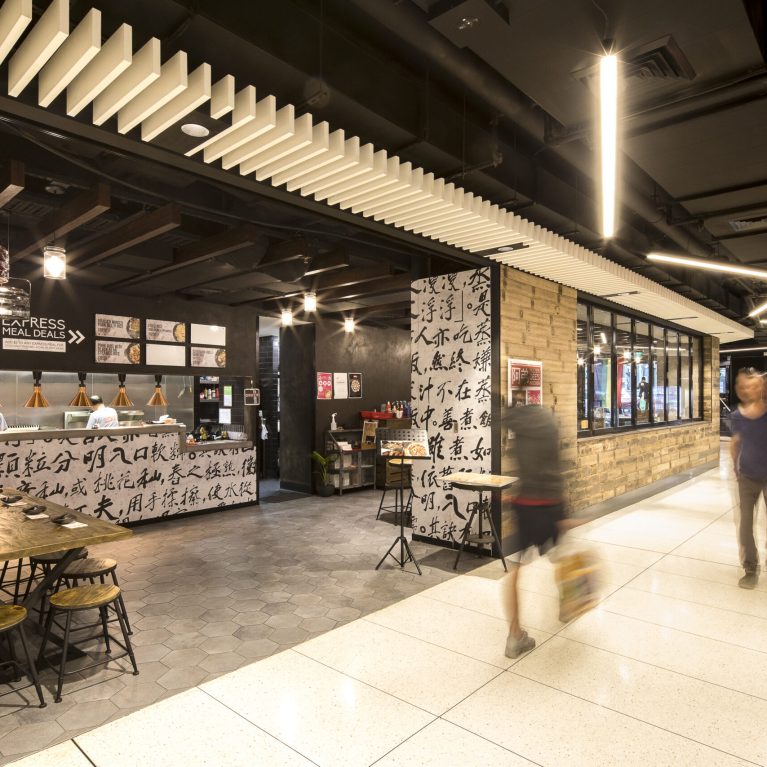
Design Clarity’s RDM scope for Oxford Village centred on orchestrating a strategic uplift across front-of-house zones, turning an ageing mixed-use centre into a legible, contemporary retail environment. The practice delivered centre-wide design guidance, shopfront controls, tenancy coordination, and mallscaping strategies, ensuring every intervention supported a unified story without overstepping the operational or budgetary realities of a working asset.
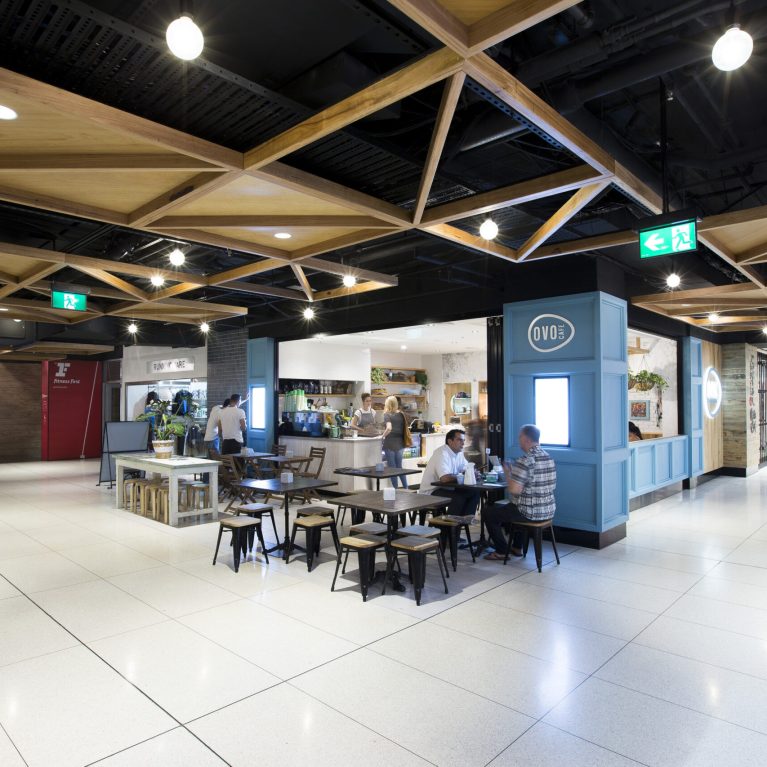
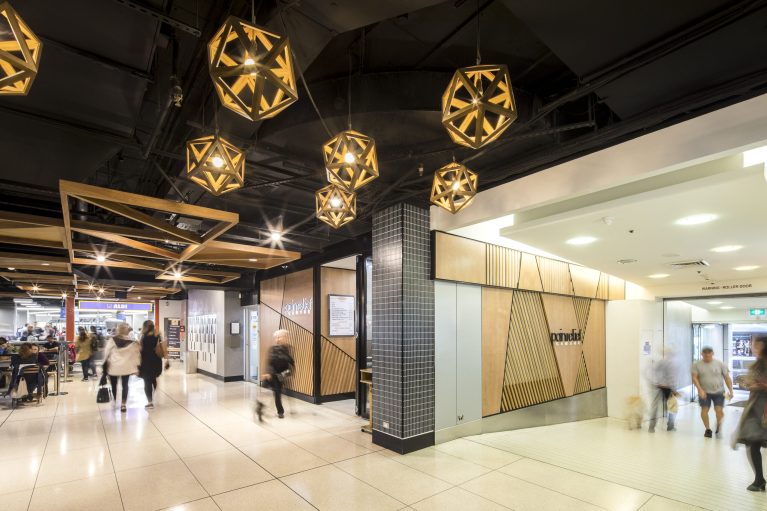
The food court threshold demonstrates Design Clarity’s role as custodians of visual consistency across a complex refurbishment. Rather than dictating stylistic treatments, the team established a design language that tenants could adopt without diluting their own brand requirements. The angular timber panelling, geometric detailing and controlled lighting hierarchy appear seamless because RDM ensured compliant alignments, material transitions, and services integration throughout the approval and construction stages.
This area also reflects the successful coordination of multiple consultants—lighting, structural, services—into a coherent ceiling strategy, replacing a previously cluttered soffit with a managed system of feature pendants, exposed services, and timber elements vetted through the RDM process for constructability and compliance. Circulation upgrades, sightline improvements, and the rationalisation of cluttered frontages were overseen through iterative reviews with contractors and stakeholders, maintaining the centre’s operational flow during works.
By steering the project from guideline creation through to tenancy fit-out approvals, Design Clarity delivered a food court interface that feels intentional, navigable, and commercially effective—an example of RDM adding value not through aesthetic authorship but through disciplined coordination and governance.