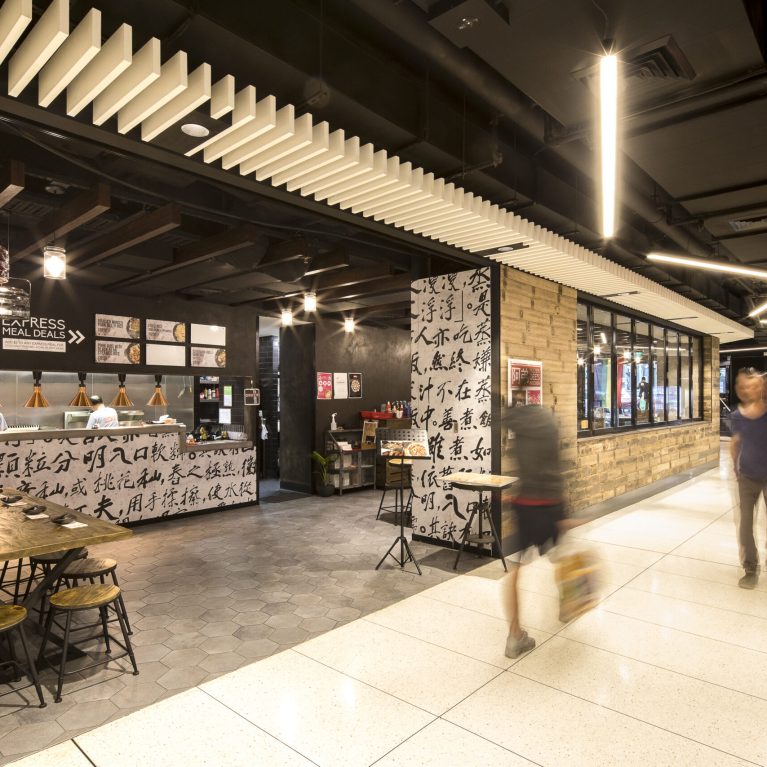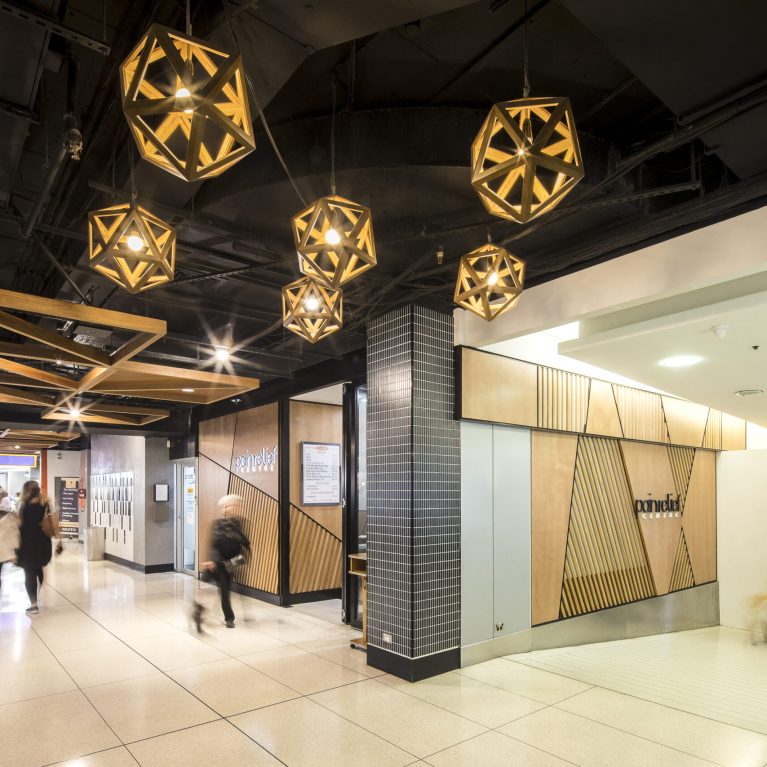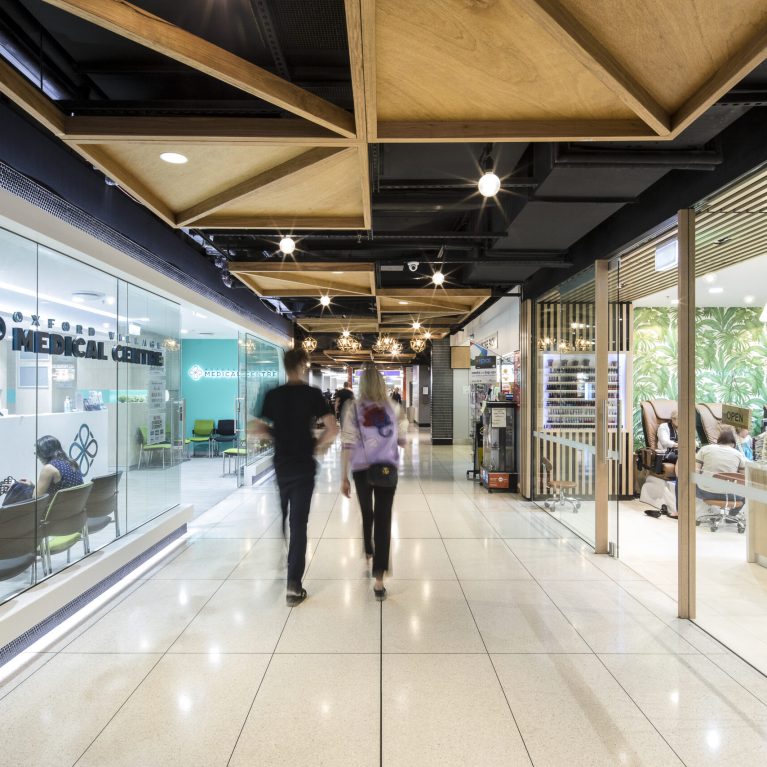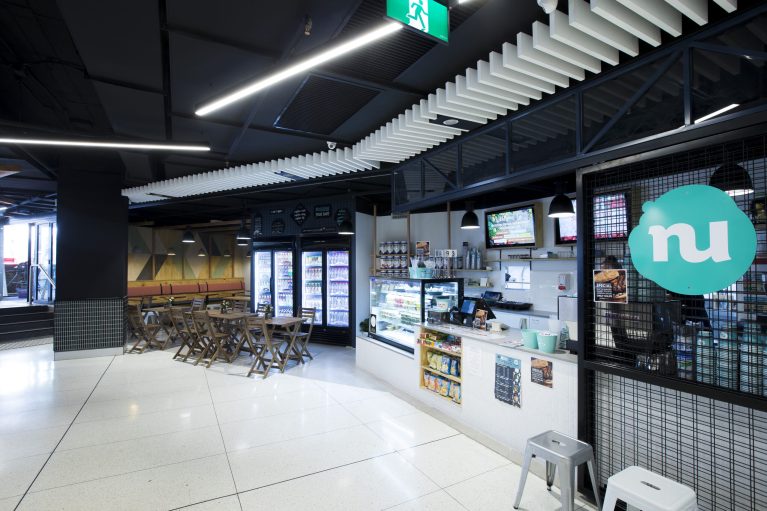
Nutrition Station presented a microcosm of typical precinct challenges: complex services, tight circulation, variable operator requirements and the imperative to maintain a unified design vocabulary. The outcome reflects disciplined RDM stewardship from briefing through to handover.
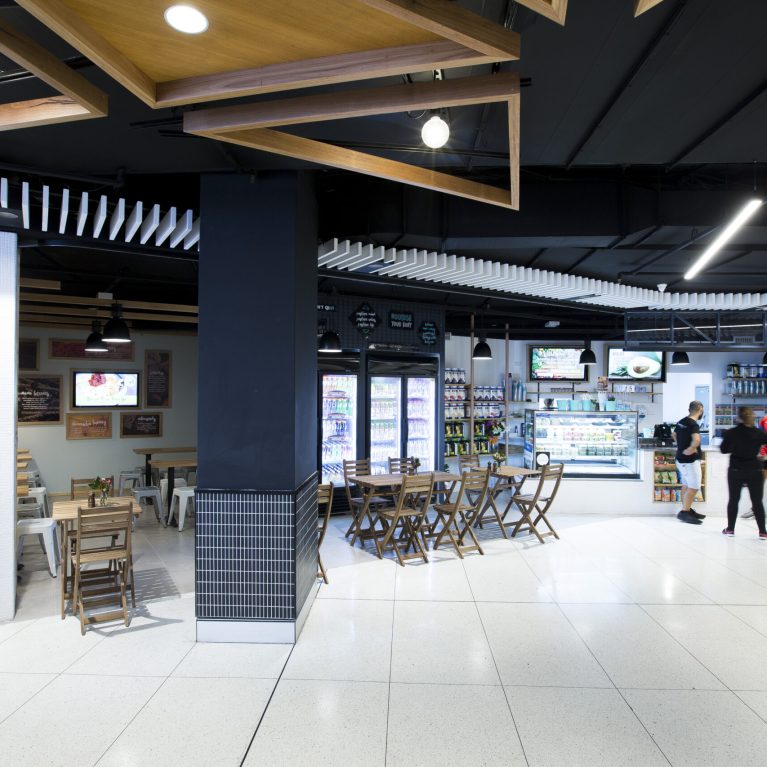
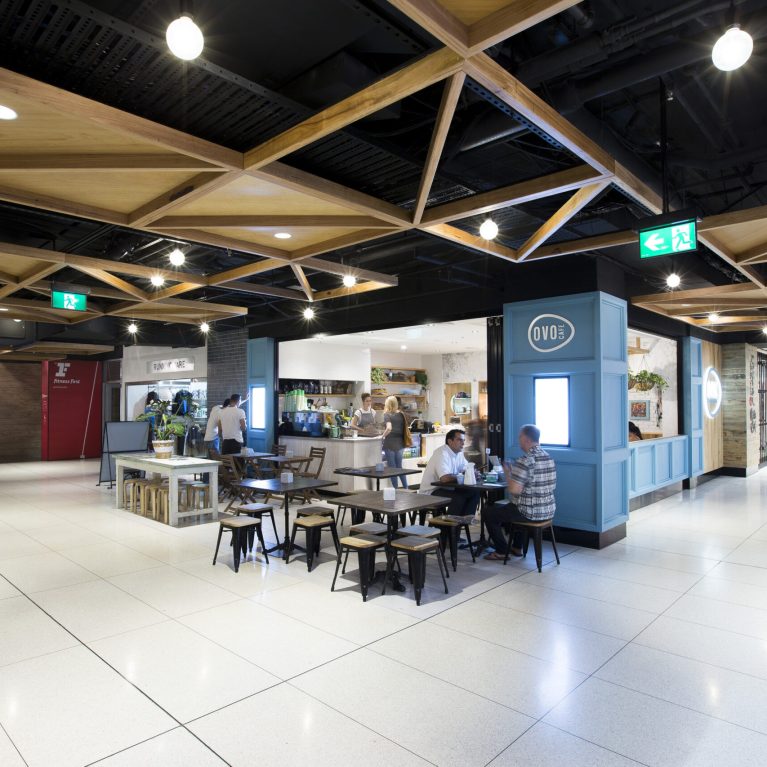
The wider view of the Nutrition Station tenancy shows how multiple operational elements—refrigerated displays, counter service, seating clusters and egress routes—were harmonised under the RDM framework. Design Clarity mediated between the operator’s commercial ambitions and the landlord’s precinct standards, guaranteeing that all front-of-house equipment met visibility, safety, acoustic and accessibility benchmarks.
The ceiling baffle system, integrated lighting and transitional thresholds form part of a broader RDM-driven mandate: align individual tenancy upgrades with the overarching architectural language. This required iterative reviews of consultant drawings, coordination with building services, and verification that emergency signage, mechanical ventilation paths and fire protection tolerances were not compromised.
RDM also ensured that merchandising locations, POS screens and refrigerated towers adhered to spatial regulations—avoiding encroachment into circulation zones and maintaining the pedestrian flow required for a mixed-use urban centre. On-site inspections validated construction quality, material compliance and alignment with the approved design intent. The finished tenancy demonstrates how structured RDM governance transforms an operator fit-out into a cohesive component of a broader precinct strategy.