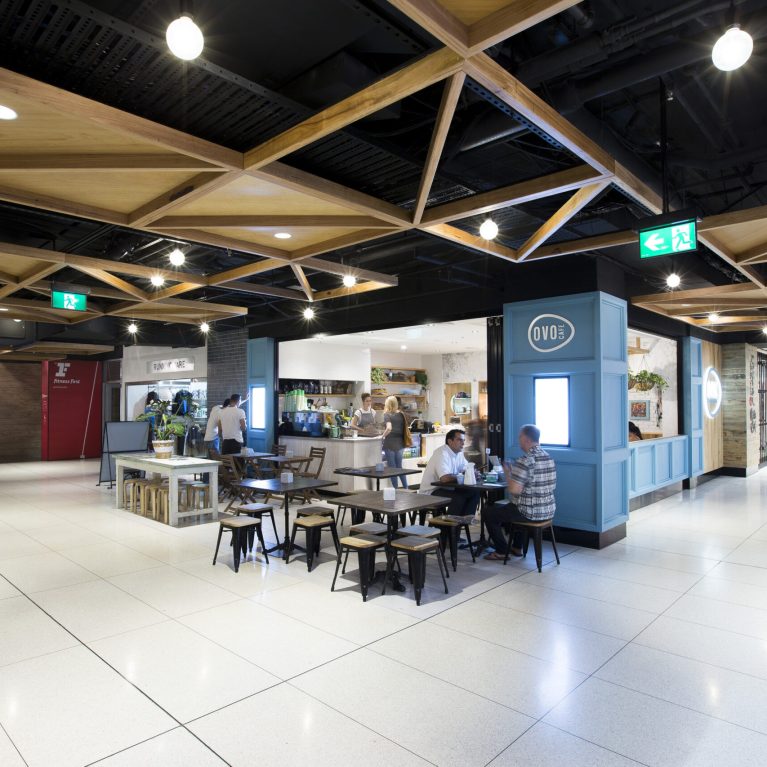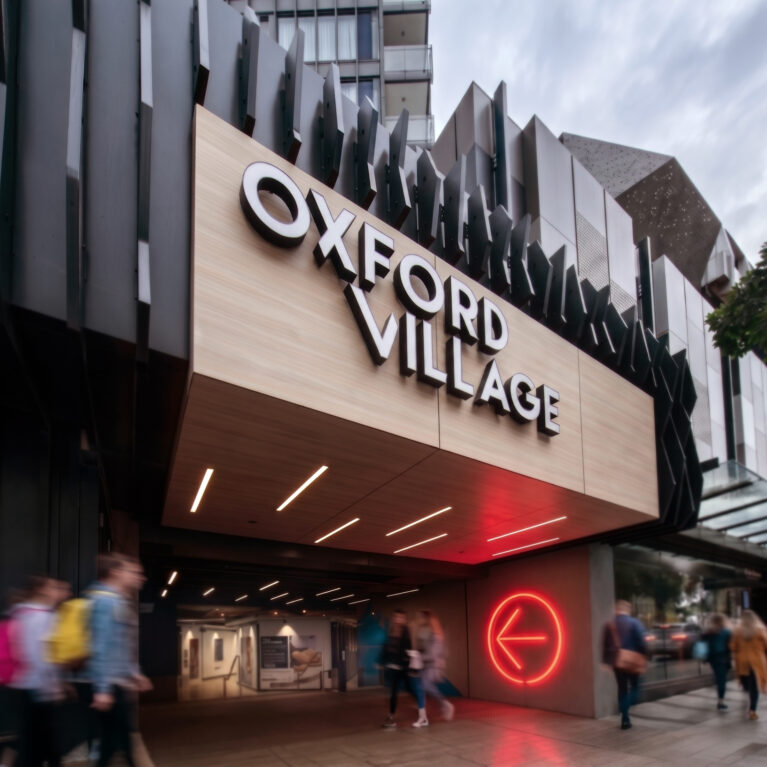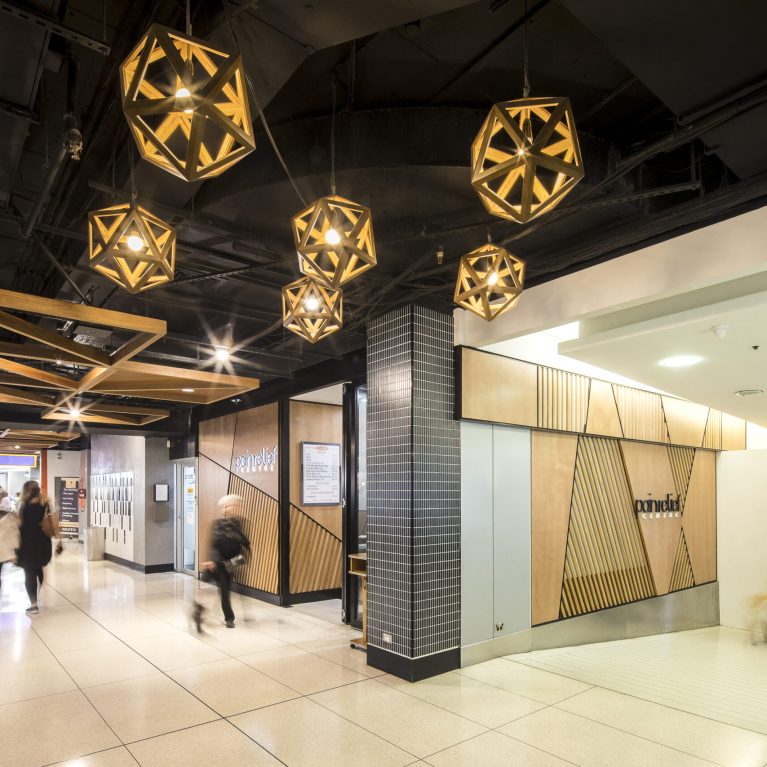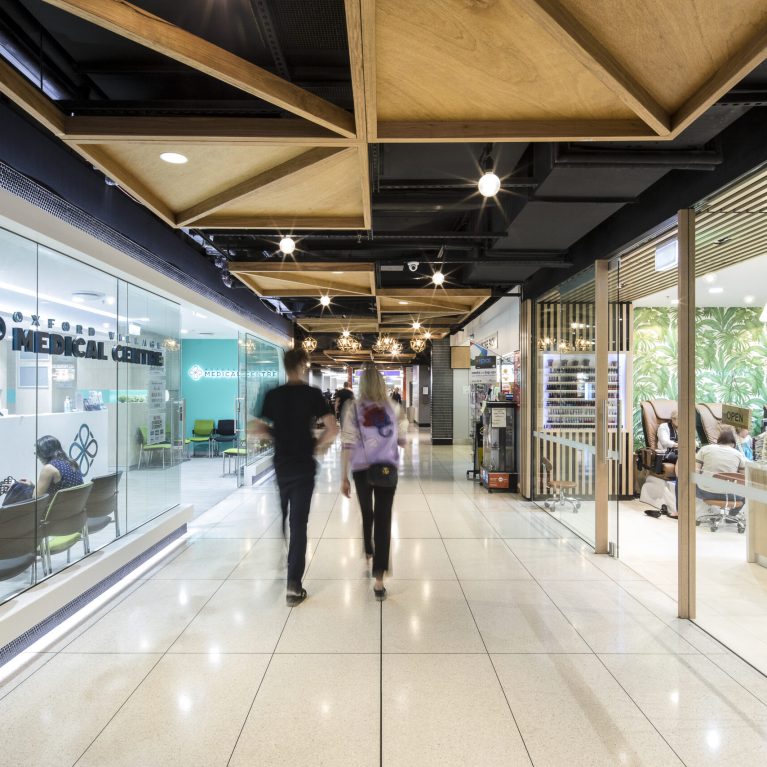
Retail Design Management remit at Oxford Village centred on turning a previously fragmented lower-ground precinct into a legible, attractive and well-coordinated retail environment. Each tenancy—and each interface with the public realm—required careful orchestration: negotiating brand intentions, landlord standards, services coordination, safety obligations and a tight programme. Nutrition Station exemplifies that disciplined process.
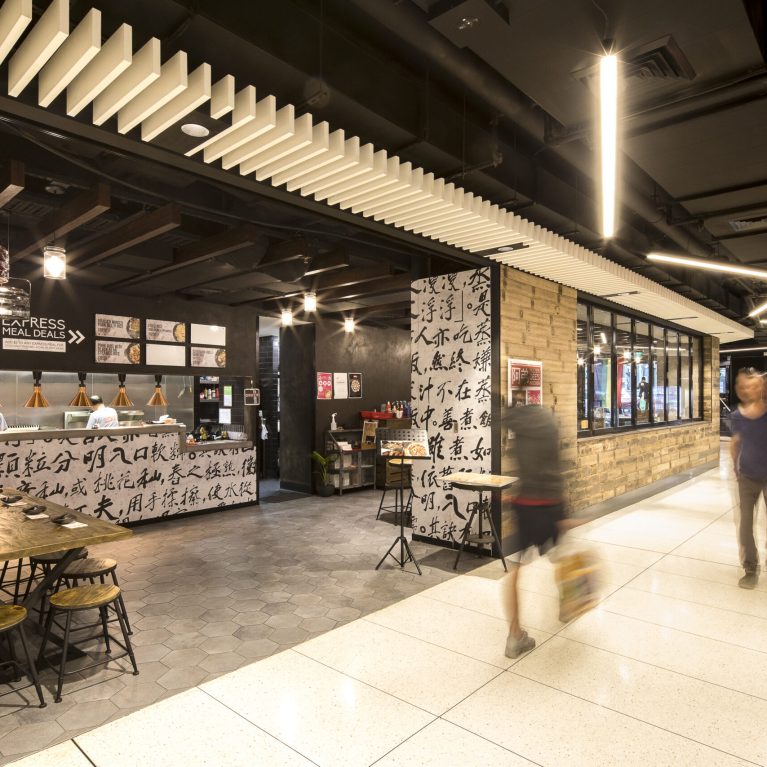
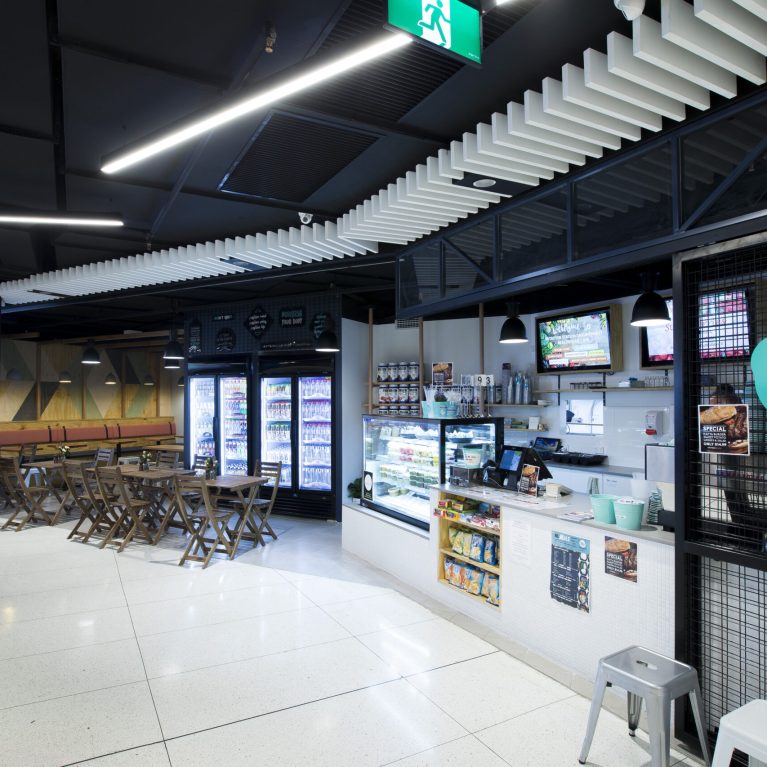
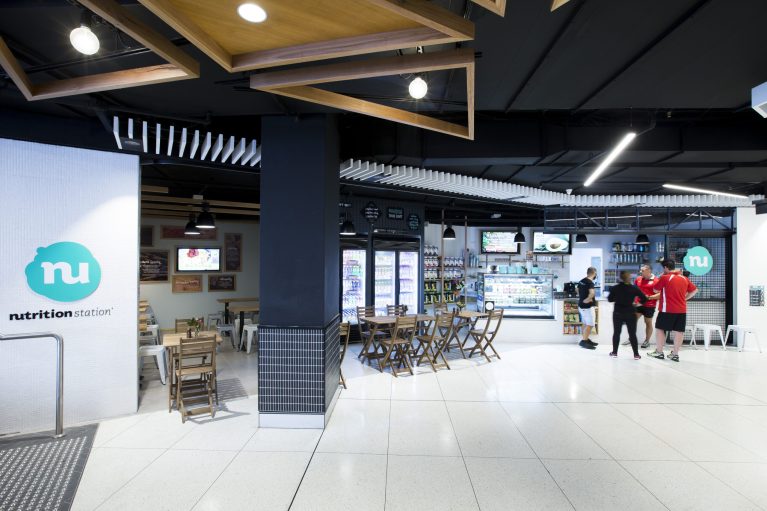
The Nutrition Station frontage shows the result of structured RDM oversight across briefing, approvals and on-site delivery. The clean white mosaic entry wall, the visible prep counter, the merchandising logic and the informal seating all sit within a calibrated framework that Design Clarity reinforced from the outset: compliant sightlines, accessible circulation, appropriate lighting levels, and a palette that integrates with the upgraded ceiling treatment and adjacent retail.
Behind this simple presentation sat an intensive RDM workflow. Design Clarity issued consolidated tenancy guidelines, resolved conflicting consultant inputs, and brokered agreements between the operator and building management to maintain fire-engineering pathways, mechanical performance and after-hours security protocols. Services penetrations, kitchen exhaust routes and refrigerated display locations were all reviewed against landlord criteria to avoid future operational conflicts.
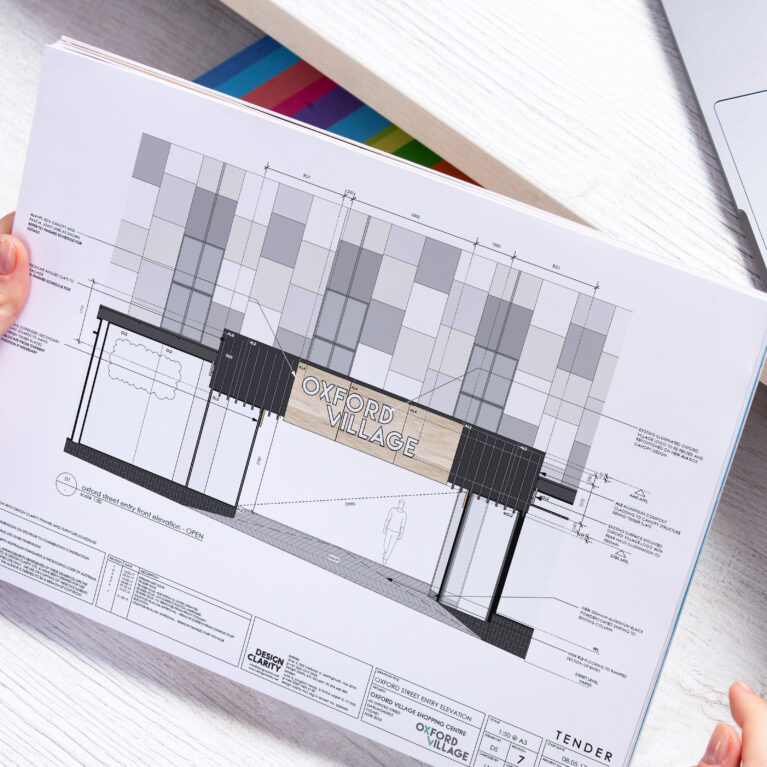
During construction, Design Clarity provided iterative drawing reviews, coordinated samples, monitored alignment with base-build tolerances and ensured statutory deliverables were lodged and accepted before opening. The result is a tenancy that reads as confident and consistent with the precinct identity—precisely because the RDM framework eliminated ambiguity, tightened execution, and protected both brand and landlord intent.